Home

The Program

5 Commitments to People at Risk for Parkinson's and Lewy Body Dementia

This program was built at Mount Sinai because the tools, the expertise, and the patient community to make it real are already here — and because no integrated program like this yet exists anywhere. Most people with RBD don't know they have it. Our program exists to change that.

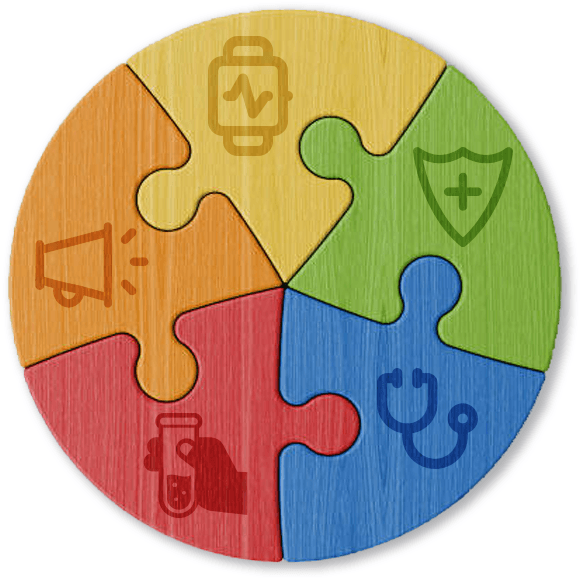
The program's five pillars visualized as a connected puzzle: scalable case detection (wearable screening), a neuroprotection shield, expert symptomatic care, research and trial readiness, and awareness and education.

How It Works

Five Pillars, One Program

Pillar 01

Diagnose Earlier, Diagnose More

Most people with RBD remain undiagnosed for years. We've built a practical, two-step approach to change that: a brief sleep questionnaire that anyone can complete, followed — for those who screen positive — by a wearable sleep analysis using a wrist accelerometer device akin to a smartwatch. This combination lets us identify high-risk individuals at scale, across clinics, communities, and online, long before a formal diagnosis would otherwise occur.

This simple approach does not replace a formal medical diagnosis on its own, but we believe a low-cost screening model like this can eventually be implemented at scale. Testing how consumer devices could support RBD diagnosis is one of our core research priorities.

Questionnaire screening
Wearable analysis
Expert evaluation

Pillar 02

Enable Expert Care

A diagnosis is only useful if something follows from it. Individuals with symptoms consistent with RBD and those who present an injury risk for themselves or their bed partner, need to be evaluated, treated and followed by neurologists and sleep specialists with deep expertise in RBD.

As this program grows, we will also build a trusted network of qualified sleep centers and providers. Managing RBD requires experience grounded in solid and up-to-date scientific evidence. People with RBD deserve care from someone who knows this condition well.

Pillar 03

Minimize Future Risk

The years between the first symptoms of REM sleep behavior disorder (RBD) and the onset of Parkinson’s disease or dementia represent a unique window of opportunity—a chance to move from passive observation to proactive care and empower individuals to take charge of their brain health.

The absence of an FDA-approved therapy does not mean the absence of meaningful interventions. A comprehensive neuroprotection strategy begins with evidence-based lifestyle measures, including a healthy diet (such as the MIND diet), regular aerobic exercise, adequate daytime light exposure, and restorative sleep—including treatment of sleep apnea when present. These measures, together with careful management of cardiovascular and metabolic risk factors such as cholesterol, blood pressure, and blood sugar, and correction of nutritional deficiencies when needed, support overall health and may help optimize long-term brain health.

In most practices today, an RBD diagnosis marks the end of the conversation. Through this program, it marks the beginning of a journey toward a better, longer, and more meaningful life.

Pillar 04

Accelerate Research

Every participant in our program contributes to something larger. By following a carefully characterized group of individuals over time — across wearables, biomarkers, cognition, and sleep — we are building one of the most valuable research cohorts in Parkinson's prevention.

In addition, we actively connect individuals to research opportunities, should they be available at Mount Sinai or across the US. This work is essential for validating new diagnostic tools, understanding the natural history of the disease, and accelerating clinical trials for therapies that could slow or prevent disease progression.

Pillar 05

Raise Awareness

Underdiagnosis is not just a testing problem — it's an awareness problem. Too many providers, primary care and family physicians, geriatricians, patients, and families have never heard of RBD.

We are committed to changing that through public education, patient stories, provider training, and community outreach. The earlier RBD enters the public conversation, the earlier people can seek evaluation and access care.

Long-Term Impact

Three Horizons. One Rare Opportunity.

Redefining Care, Starting Now

This program is designed to do more than improve referral patterns. It aims to redefine the standard of care for the millions of people living unknowingly in the prodromal phase of Parkinson's disease and Lewy body dementia. In the near term, it will identify patients earlier, connect them to expert care, and give them meaningful access to neuroprotective strategies and research.

A 5–10 Year Horizon

Over a 5–10 year horizon, the program's goal is to have enrolled thousands of RBD-affected individuals, generated a trial-ready cohort that attracts national and industry partnerships, and produced a reproducible operational model ready for dissemination to other health systems.

A Rare, Defining Opportunity

The opportunity is rare: a disease signal visible years in advance, a patient population that can be reached, and a health system with the tools to act. Mount Sinai has the chance to build something that doesn't yet exist anywhere — and to do it first.